Industrial Converters
Types, Applications, and Importance
Industrial converters are the backbone of modern power electronics. They ensure that electrical energy is transformed into the right form for industrial machines, automation systems, renewable energy plants, and transportation. Without converters, industries would face inefficiencies, equipment damage, and unstable energy supply.
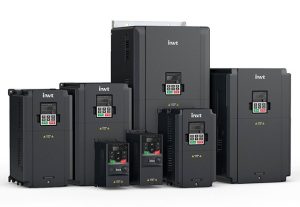
What Are Industrial Converters?
An industrial converter is an electronic device that modifies voltage, current, or frequency to match the requirements of industrial equipment. They are designed for high reliability, long lifespan, and energy efficiency.
Core Components
-
Semiconductors (IGBTs, MOSFETs, thyristors)
-
Transformers & Inductors for isolation and energy storage
-
Capacitors for filtering
-
Control units (microcontrollers, DSPs, PLC integration)
Industrial converters are essential devices that transform electrical energy from one form to another, enabling efficient operation of machinery, automation systems, and renewable energy solutions. They are widely used in manufacturing plants, power distribution networks, automotive systems, and renewable energy projects.
What Are Industrial Converters?
An industrial converter is an electronic device that processes and controls the flow of electrical energy. It ensures that voltage and current are supplied in a form suitable for the end application. Converters typically consist of:
-
Power circuit (switches, transformers, capacitors, resistors)
-
Control circuit (digital or analog regulation)
-
Load (industrial equipment or system)
Types of Industrial Converters
| Converter Type | Function | Industrial Applications |
|---|---|---|
| AC to DC (Rectifier) | Converts alternating current to direct current | Power supplies, battery charging |
| DC to AC (Inverter) | Converts DC to AC of desired frequency/voltage | Renewable energy, motor drives |
| DC to DC (Chopper) | Converts constant DC to variable DC | Robotics, automation, voltage regulation |
| AC to AC (Cycloconverter/Matrix Converter) | Converts AC to AC with different frequency/voltage | Large motor control, traction systems |
Types of Industrial Converters
1. AC to DC Converters (Rectifiers)
-
Function: Converts alternating current (AC) to direct current (DC).
-
Applications: Battery charging, DC motors, electroplating.
2. DC to AC Converters (Inverters)
-
Function: Converts DC to AC with controlled frequency and voltage.
-
Applications: Solar power systems, UPS, motor drives.
3. DC to DC Converters (Choppers)
-
Function: Steps up or down DC voltage.
-
Applications: Robotics, automotive electronics, voltage regulation.
4. AC to AC Converters (Cycloconverters, Matrix Converters)
-
Function: Converts AC to AC with different frequency/voltage.
-
Applications: Large motor control, traction systems, aerospace.
Key Features
-
High efficiency (95%+)
-
Wide input voltage range
-
Protection systems (overvoltage, short-circuit, thermal)
-
Compact design for industrial panels
-
Smart monitoring with IoT integration
Applications
-
Manufacturing: CNC machines, welding systems
-
Renewable Energy: Solar inverters, wind turbine converters
-
Transportation: Electric trains, EV fast chargers
-
Data Centers: UPS systems, power conditioning
-
Oil & Gas: Pump drives, drilling equipment
Advantages
-
Energy savings
-
Increased equipment lifespan
-
Stable power supply
-
Flexibility in industrial automation
Challenges
-
Heat management
-
Harmonics and EMI
-
High initial cost
-
Need for skilled maintenance